Indian food catering covers a lot of ground — a corporate lunch for twenty, a wedding reception for three hundred, a backyard graduation, a religious function at a community hall. The food is the centerpiece, but the difference between a smooth event and a stressed one is almost always in the planning: the menu, the portion math, the dietary details, and the service setup. This guide lays out what to look for when you are comparing Indian food catering in the Seattle area and across the Pacific Northwest.
What an Indian Catering Menu Actually Includes
A full Indian catering menu is not a single curry in a tray. It is built in sections, and a good caterer will walk you through each one. Here is the structure you should expect.
Appetizers. Tandoori items lead — chicken tikka, malai chicken tikka, tandoori chicken, sheesh kebab, and paneer tikka for the vegetarians. Street food and chaat come next: gol gappe, chaat papri, samosa, aloo tikki, and pakoras. These set the tone of the meal and are where most guests form their first impression.
Main courses. The vegetarian side runs from daal makhani (the slow-cooked black lentil dish that is the backbone of North Indian catering) to palak paneer, paneer tikka masala, and malai kofta. The non-vegetarian side runs from butter chicken and chicken korma to goat curry and bhuna lamb. A balanced menu has two to three mains per section, not one.
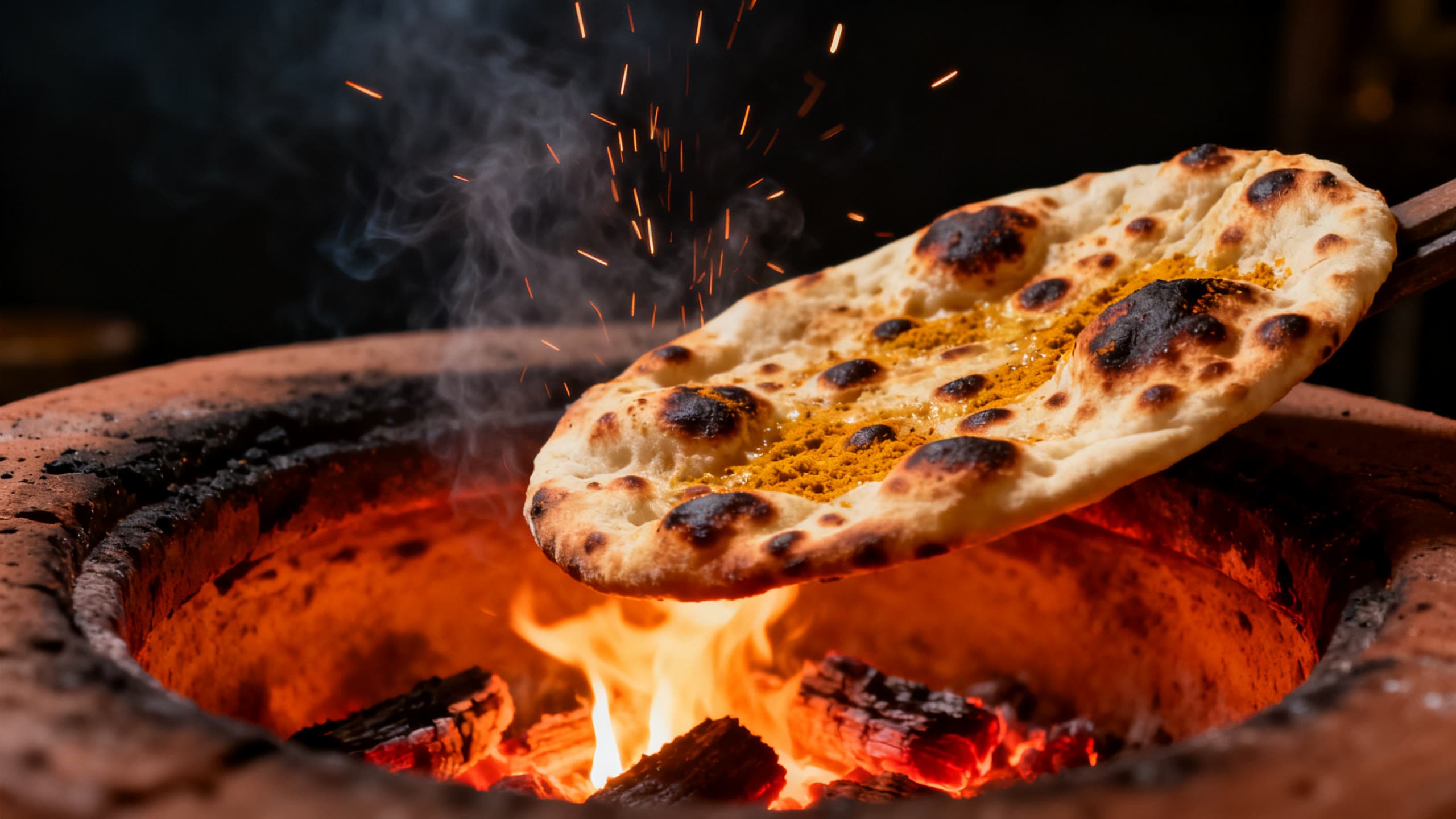
Breads and rice. Buttered naan and Amritsari kulcha, ideally baked fresh on site, plus saffron pulao, jeera rice, and basmati rice. Breads cooked in a tandoor at the venue are a clear step above reheated naan.
Desserts. Gulab jamun, jalebi, gajar halwa, rasmalai, and kulfi. A live jalebi station is a popular add-on that turns dessert into a moment.
You can see the full scope on the Sardar Ji Catering menus page, which is organized the same way.
Tandoor and On-Site Cooking: Why It Matters
The single biggest quality difference in Indian catering is whether the food is cooked fresh at the venue or reheated from a kitchen miles away. A caterer with a mobile kitchen and its own tandoor can bake naan and grill tandoori meats on site, which changes the texture and flavor entirely. Venues without a kitchen — backyards, banquet halls, community spaces — are all serviceable when the kitchen travels with the caterer.
This is worth asking about directly before you book. If the answer is "we bring it hot in insulated boxes," the bread and the tandoori items will tell.
Dietary Requests: Vegetarian, Vegan, and Halal-Friendly
Indian catering handles dietary requests more naturally than most cuisines because the vegetarian tradition is so deep. A wide vegetarian range is standard, and fully plant-based menus can be built on request. Spice levels are adjusted during a tasting session, not guessed at.
For halal, the important distinction is wording. Halal-friendly options available on request is a service statement — the caterer can prepare halal-friendly dishes. It is not the same as halal certified, which is a certification claim. If halal is central to your event, confirm the exact capability with the caterer and read more in our guide to halal-friendly Indian catering.
Portion Planning and Event Size
A common mistake is ordering too little of the items people actually want and too much of the filler. A practical guide for a full dinner:
- Plan roughly one main course serving per guest per main, and lean toward two vegetarian mains for every one non-vegetarian main at mixed events.
- Appetizers: two to three pieces per guest for a reception, four to five for a cocktail-heavy event.
- Naan: two to three per guest, more if it is being baked fresh.
- Rice: one portion per guest, with a little extra.
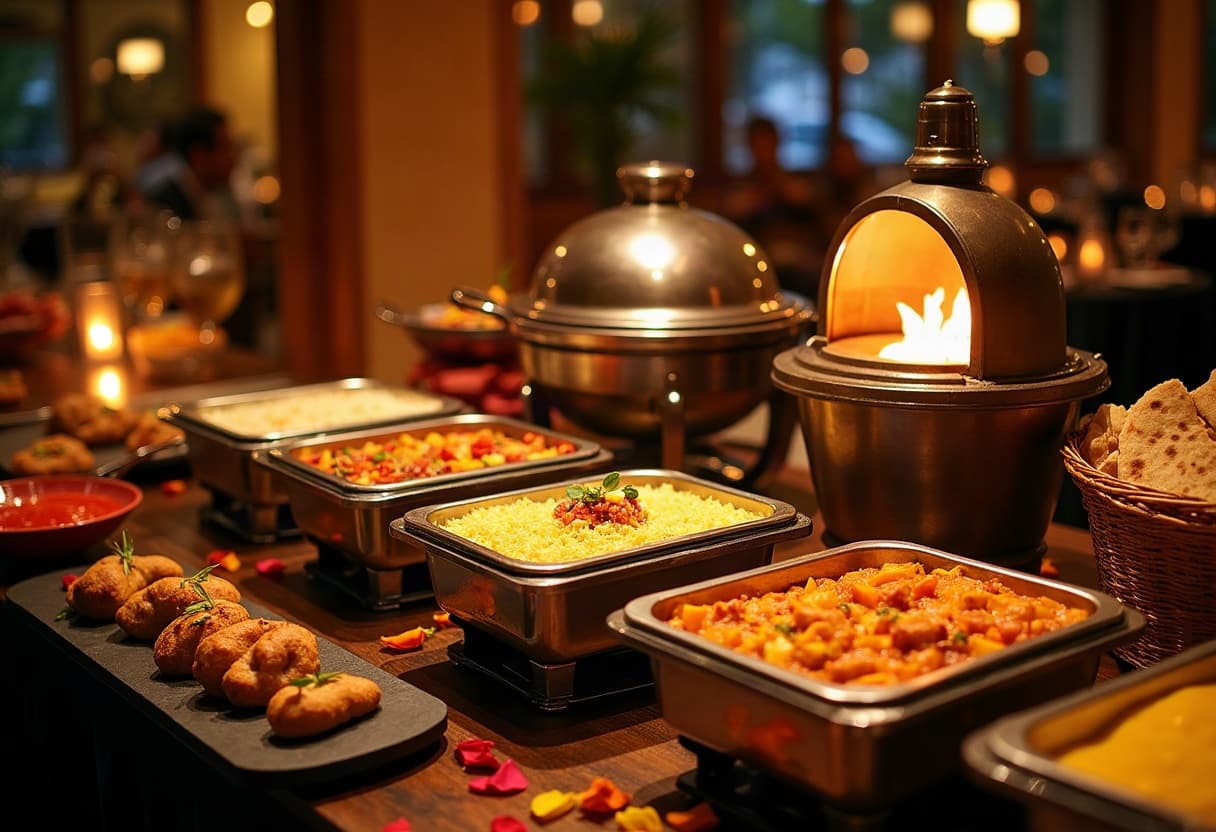
For buffet service specifically, setup and staffing scale with headcount — more chafing dishes and more staff for larger crowds. Our buffet catering guide breaks down the setup window and what full-service includes.
What to Ask Before You Book
- Is there a tasting? A tasting session where you try the actual dishes and adjust spice levels is the single best predictor of quality.
- Do you cook on site? A mobile kitchen with a tandoor changes the result for breads and tandoori items.
- What is included in full service? Delivery, setup, chafing dishes, serving staff, linens, and cleanup should be on the list, not surprise add-ons.
- Can you handle dietary needs? Vegetarian, vegan, and halal-friendly options should be confirmed in writing.
- What is the per-guest range? Most events land between $15 and $40 per guest depending on the menu; quotes are given per headcount, not from a fixed price list.
A Local Option in the Pacific Northwest
Sardar Ji Catering is an authentic Punjabi caterer based in Seattle, serving Seattle, Kent, Bellevue, Tacoma, Renton, Auburn, Federal Way, Everett, Bothell, Redmond, and Olympia, with Vancouver, WA and Portland available by arrangement for large events. The kitchen operates from the Roosevelt neighborhood with a mobile kitchen and its own tandoor, and full-service catering covers delivery, buffet setup, plated dinners, uniformed wait staff, and cleanup.
If you are planning an event and want to taste the food before you decide, request a tasting through the contact page or call (206) 771-5079. You can also review the catering packages to see how an Elite Reception or a Punjabi wedding package is structured.